A is for Atrium

Figure 1. Interior of Shanks Hall atrium, showing sunlight streaming through glass ceiling and open walkways. (Original photograph, Anthony LaRosa).
Light pours through the glass ceiling, striking the freshly polished floors in a diagonal pattern that shifts with the sun. With all the silence like the calm before the storm. I pause near the center, noticing how the atrium blends indoors and outdoors, how stillness meets motion, how reflection meets reality. Dust floats lazily in the beams of light. Taking a photo feels like freezing the beauty of the perfect blend of indoor and outdoor. Capturing a moment that is both ordinary and extraordinary in its fleeting, quiet, perfect balance. (90)
B is for Bus loop
Figure 2. Students and commuters at the Blacksburg Transit bus loop, morning activity and motion captured. (Original photograph, Anthony LaRosa).
The bus pulls in slowly, with a steady rumble, the doors swing open like a floodgates at a dam. One after another, students spill out, filling the sidewalk with chatter and laughter. The cool brisk October air greets the students instantly, carrying the faint scent of fall fever. The mid-morning sun casts a sharp glare that seems to be blind everyone for a moment. Some students walk quickly, while others mingle, heads down to their phones or talking in small groups, the rhythm of campus life flowing steadily around them.
C is for crosswalk
Figure 3. Crosswalk near Turners showing students walking across with Purpose. (Original photograph, Anthony LaRosa).
The crosswalk is busy with students and faculty moving lazily in morning to and from class. Nearby, the construction site by turners clanging and banging, filling the air with metal sounds like a busy intersection. Cars wait impatiently as waves of people cross, holding peoples phones and backpacks. Though the crosswalk is simple in design, confusion often dominates some hesitate, unsure if the cars will actually stop, while others dart across bravely. Everyone shares the same unspoken goal, to make it safely across without becoming part of the morning chaos.
D is for Drillfield
Figure 4. Students walking to class across the drillfield. (Original photograph, Anthony LaRosa).
When you think of Virginia Tech one of the first things you think of is the great Drillfield. A great big open space separating the residential and academic sides of campus. On a chilly October morning, birds chirp all around, almost as if they were reminding students it’s time to wake up. Students rush across with their backpacks, their breath visible in the cool air. Most likely they slept in a little too long, racing to make it to class on time and I can’t lie, I’ve been there before.
E is For entrance
Figure 5. Entrance to shanks hall on a cool brisk morning. (Original photograph, Anthony LaRosa).
The entrance to Shanks hall, some call it just another building, but I call it home. As a Communications major, it’s where I’ll spend the next few years growing, learning , and finding myself as an adult. The morning is cool as I walk from my eight a.m. class. backpack heavy and mind still waking up. In the distance, I hear the cadets doing their morning PT on the grass, it sounds like a coach prepping his team for the big game. Shanks waits ahead, familiar and full of purpose. (90)
F is for fountain
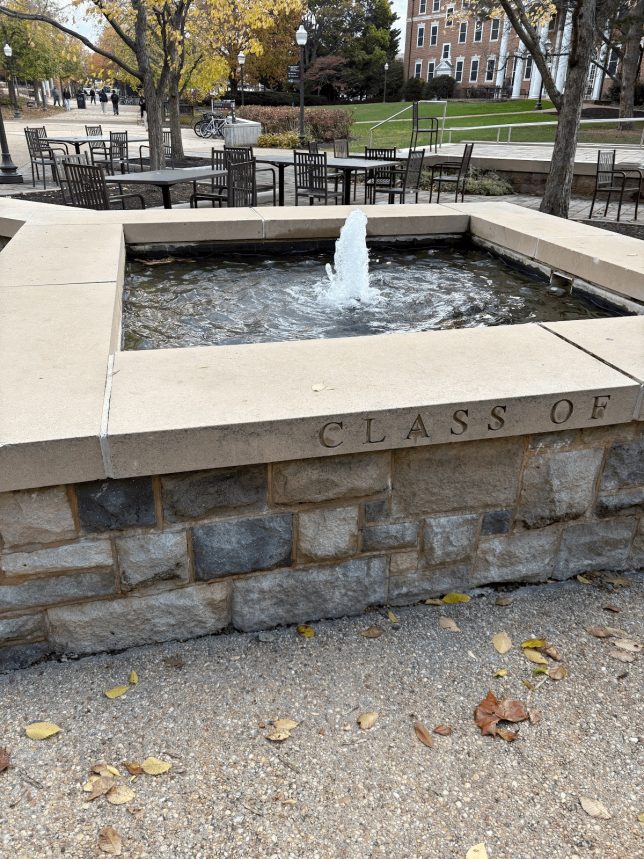
Figure 6.Picture taken at the fountain outside of squires. (Original photograph, Anthony LaRosa).
The fountain at Squires Plaza whispers beneath the noise of campus. The cloudy weather dances across the rippling reflecting every drop into a spark of light. You don’t see the students sitting at the tables like you would on a nice warm day. You can see the coins resting at the bottom of the water, the shine of the coins makes you feel like you can see all the wishes people have made. For a moment the world slows just the sound of the water reminding me to be present. (90)
G is for Glass
The glass in the stairwell at Perry Place Parking Garage makes you feel like a gateway into the world of college. Morning light filters through the panels subtly and golden rays spill across the steps as I descend. Each reflection shows the motion of students hurrying below, their energy buzzing in the air. The clouds above are just enough to let in a burst of brightness as if the day itself were welcoming me. Standing there surrounded by glass and light I feel ready almost like anything could begin here. (90)
H is for Hokie stone
Caption:
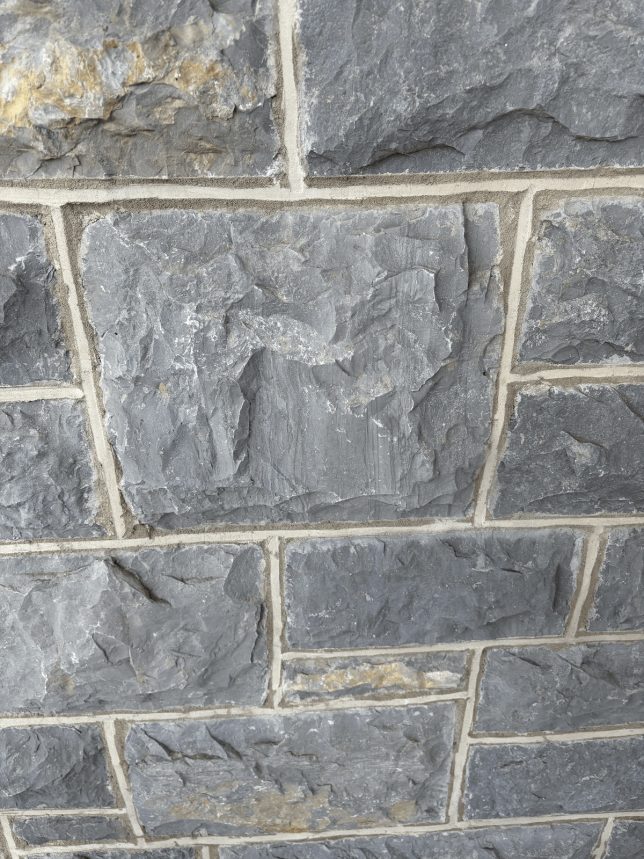
Figure 8. Picture taken in the stairwell of the Perry Place Parking Garage of the famous hokie stone. (Original photograph, Anthony LaRosa).
Hokie stone is what this great university is built on literally. You can’t go anywhere on campus without seeing that beautiful stone staring right back at you. Each block feels timeless connecting every building through the same rough texture and cool touch. The sleek grey limestone makes this campus look like as if its straight out of Harry potter or some medieval castel form back in the renaissance era. It’s more than architecture, it’s identity. Every glance at the stone reminds me I’m part of something strong, something unmistakably Hokie. (90)
I is for Intersection
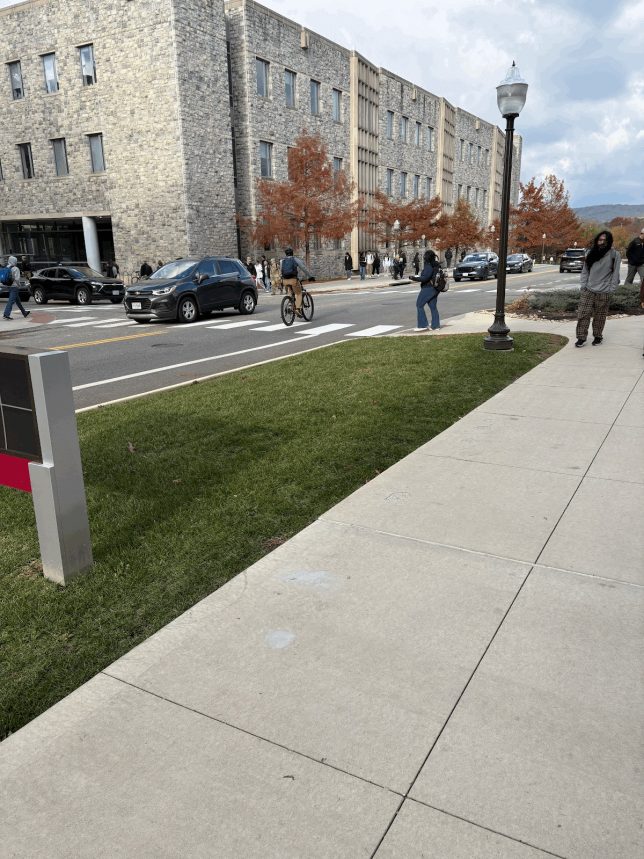
Figure 9.Picture taken of the intersection at Turners. (Original photograph, Anthony LaRosa).
The intersection paints a very vivid and diverse picture of campus life. You can see cars driving by, you see people walking to and from class with headphones and backpacks bouncing. You see people biking weaving carefully between it all, creating a choreography of movement that somehow works without a pause. But what makes the intersection so special is how all these variables coexist perfectly and makes it seem like perfect constant motion. The different speeds, sounds and intentions blending into one seamless flow.Its constant motion but never chaos. (90)
J is for Johnston student center
Caption:
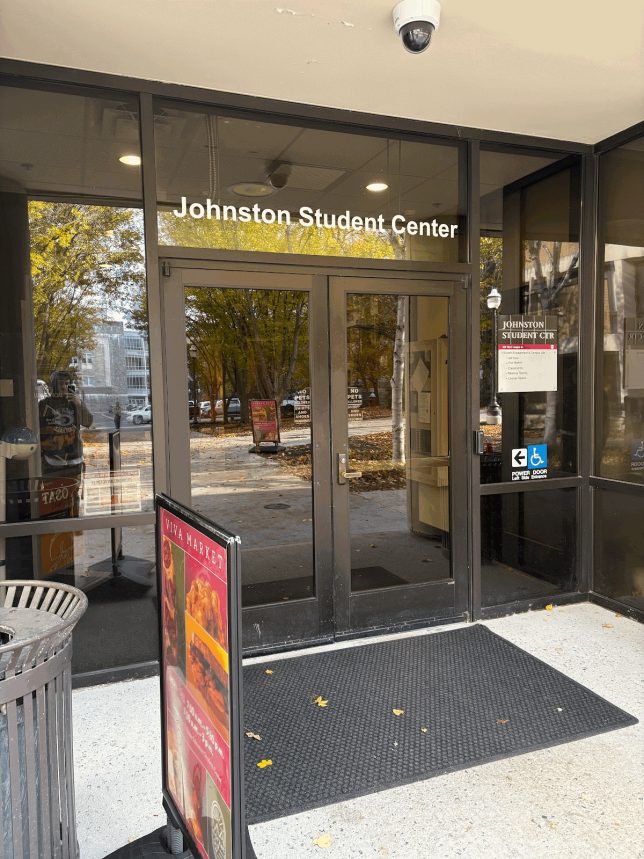
Figure 10. Picture taken of the Johnston Student Center . (Original photograph, Anthony LaRosa).
The Johnston Student center feels like the heartbeat of campus life. Whether it’s students grabbing coffee, studying between classes or catching up with friends, the cool air and harsh breeze made all the students go inside instead of being outside. The blending of the smell of coffee and the laughter of the students and footsteps echoing down the hall.Groups huddle around tables studying or sharing stories between classes. It’s a living space that balances focus and connects a place where the Virginia tech community comes alive every single day. (90)
K is for Kiosk

Caption:
Figure 11. Newman hall package showing the central touchscreen and surrounding locker system, where students scan their pickup codes to retrieve packages throughout the day. (Original photograph, Anthony LaRosa)
The Newman Hall kiosk always feels half-asleep in the mornings. Its touchscreen glows faintly under a layer of scratches and the sun faded stickers, waiting for someone rushing between classes to tap in their pickup code. The boxes stacked around it hum quietly, each holding packages from homes far away snacks, sweatshirts, reminders that someone is still thinking about you. I stop here more than I admit, watching students hover, scan, grab, go. It’s a tiny crossroads of campus life, where digital alerts turn into something you can actually hold. (90)
L is for Lane stadium
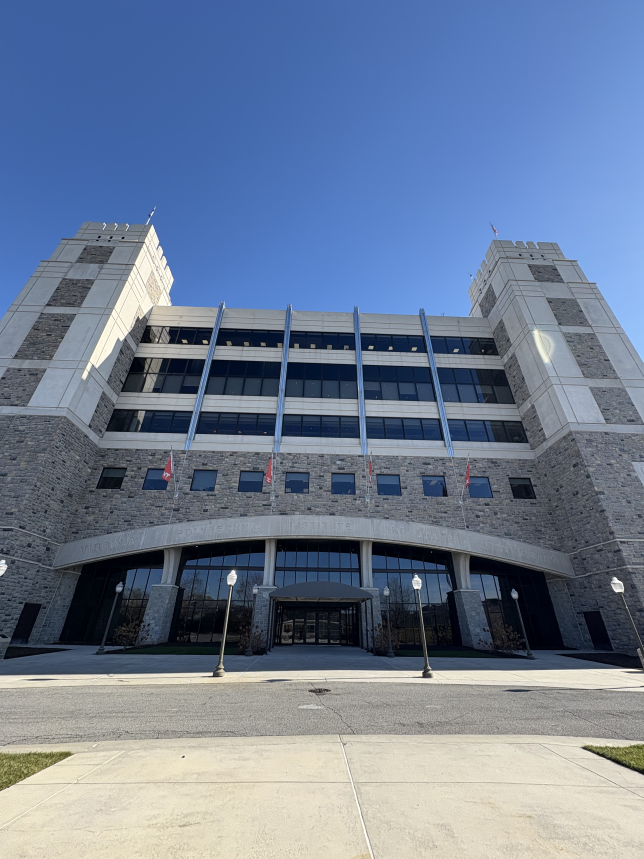
Figure 12. Front entrance of Lane stadium viewed from ground level, showing its stone exterior, glass windows, and twin towers against a clear blue sky. (Original photograph, Anthony LaRosa)
Lane Stadium looks different when it’s empty and quiet, almost polite. Walking past the towering stone exterior, it’s strange to remember how loud this place gets, how the whole building shakes on game days. Today the sky is a perfect, impossible blue, and the flags barely move. The dark windows reflect nothing but sunlight and the faint outline of passings students. Without the crowds, the stadium feels more like a monument than a football stadium, a reminder of how many memories pile up here long before anyone even steps inside. (90)
M is for mailboxes

Figure 13. Rows of numbered mailboxes outside a Virginia Tech residence hall, arranges in even vertical columns with uniform labels. (Original photograph, Anthony LaRosa)
he mailboxes sit in tight, perfect rows, each one is marked with a small A and a number that feels strangely personal, like an address without a street. Walking past them, I always notice how quietly they are no rattling doors, no envelope sticking out, just flat panels waiting for someone to claim whatever’s waiting inside. Their repetition is almost hypnotic, a grid of small promise sealed behind metal. Even unopened, they hint at a movement, messages traveling across states, landing here, ready to be found by the right hands. (90)
N is for No parking sign
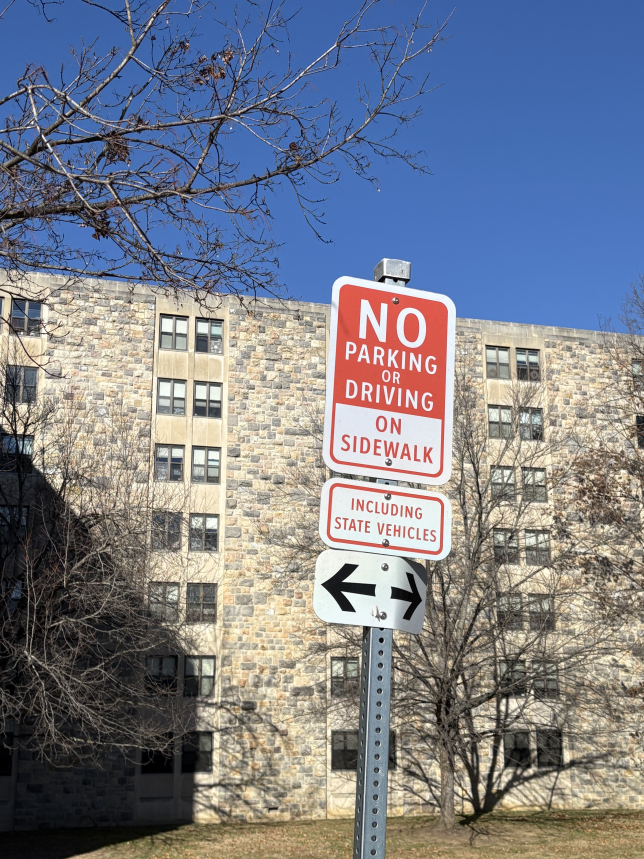
Figure 14. A red and white No parking or driving on sidewalk sign standing in front of a Virginia Tech residence hall, framed by bare branches and clear blue sky. (original photograph, Anthony LaRosa)
The red sign stands out against the Hokie stone building, shouting its message even though no one seems to be breaking the rule. I pass it almost every day, always a little amused by how serious it sounds NO PARKING OR DRIVING ON SIDEWALK like someone, at some point, really needed that reminder. The arrows point both directions, unsure where enforcement begins or ends. In the still morning air, the sign feels less like a warning and more like part of the landscape, another small command woven into campus routines. (90)
O is for Owens dining hall
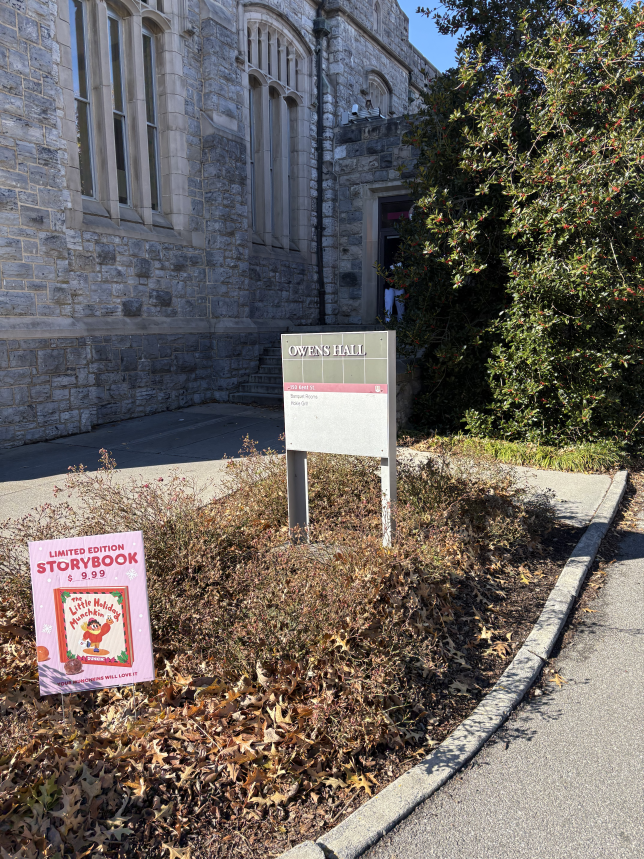
Figure 15. Owens Hall always sign and surrounding landscape, including a small holiday-themed storybook advertisement placed among fallen leaves and shrubs. (Original photograph, Anthony LaRosa)
Owens hall always feels a little tucked away, even though so many students pass it every day for food, meetings, or a quick shortcut between classes. The Hokie stone exterior catches the morning light in a way that makes the windows glow faintly, almost like they’re reflecting a different season entirely. Today, a small holiday storybook sign sits in the mulch by walkway random, cheerful, and slightly out of place. It adds a touch of color to the gray stone, reminding me how campus surprise you when you slow down. (90)
P is for pylons
Figure 16. Stone pylons of the War memorial at Virginia Tech, each featuring carved figures and long shadows cast across the plaza on a clear winter afternoon. (original photograph, Anthony LaRosa)
The pylons rise above the steps like quiet guardians, each one holding a carved figure that seems to watch over anyone passing through. in the afternoon light, their shadows fall inn long, sharp angles that make the whole structure feel larger than it already is. Walking beneath them, you can’t help but feel the weight of what they stand for service, sacrifice, legacy. Even on a calm day, with no one else around, the space feels charged. The pylons don’t ask for attention, yet they always manage to hold it. (90)
Q is for QR code
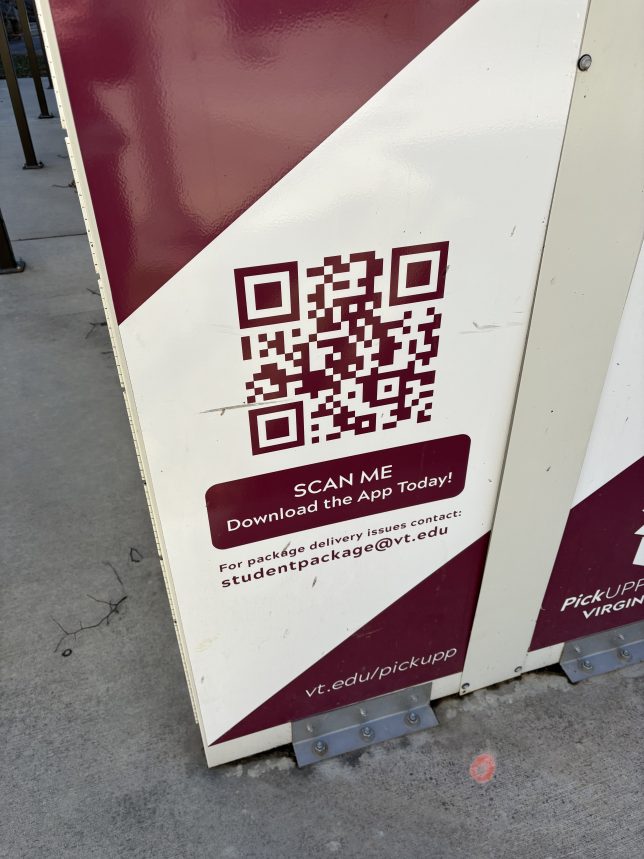
Figure 17. Close up of a maroon and white QR code panel on a Virginia Tech package kiosk, highlighting the scan me app prompt at ground level. (Original photograph, Anthony LaRosa)
The QR code sits at the bottom of the kiosk panel like a silent, square, and strangely powerful. I walk past it almost every day, yet I rarely stop to think to think about how easily we trust these little pixel patterns to send us somewhere useful. One quick scan and you’re in a different space digital instructions unfolding on your screen. Standing here, with cold concrete underfoot and the afternoon light reflecting off the sign, it feels like tiny doorway between campus routines and the world inside our phones. (90)
R is for railing
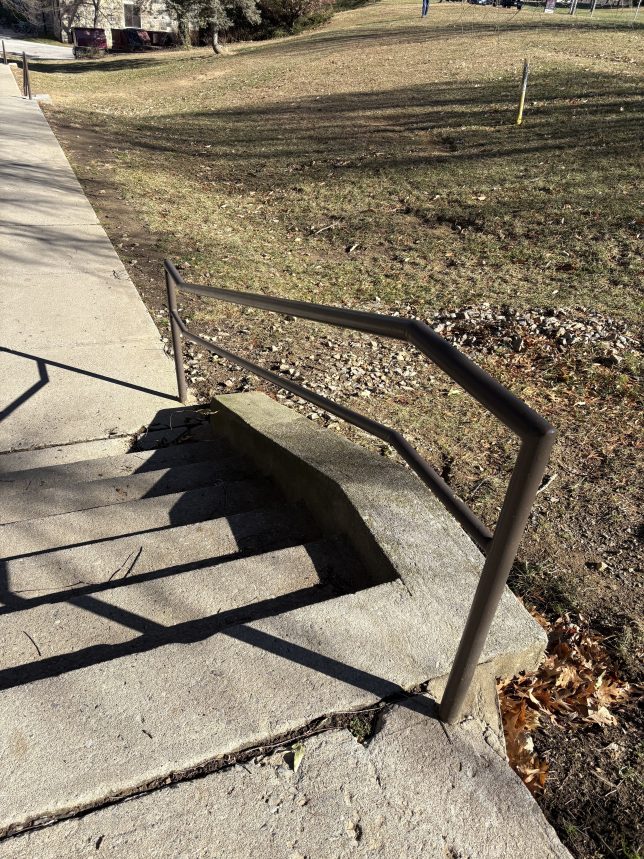
Figure 18. Metal railing along a short set of outdoor steps, casting long angled shadows across the concrete on a sunny afternoon. (Original photograph, Anthony LaRosa)
The railing bends with the slope of the hill, guiding you down the steps even when you barely notice your hand brushing against it. Its metal surface catches the afternoon light, throwing long shadows across the concrete in zigzag angles. I always think about how many people rely on it without thinking steadying themselves on icy mornings, slowing down after rushing between classes. It’s a small, ordinary piece of campus infrastructure, but walking past it today, it feels like a quiet reminder that not every form of support is obvious. (90)
S is for stairs
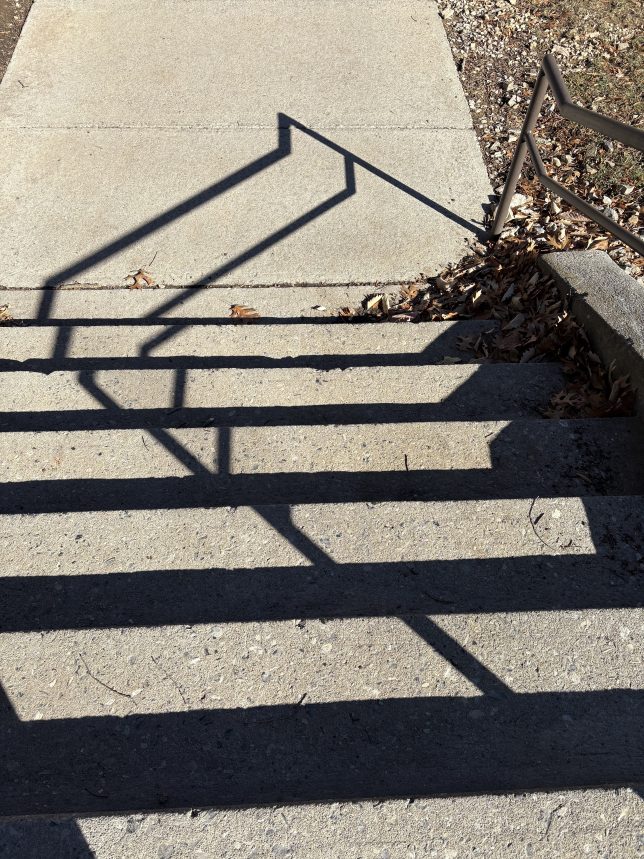
Figure 19. Concrete stairs with sharp, angled shadows cast by the nearby railing on a sunny afternoon at Virginia Tech. (Original Photograph, Anthony LaRosa)
The stairs look simple at first, just another shortcut carved into the slope of campus, but standing here you notice how the sunlight transforms them into something special. Each step holds a band of shadow, perfectly spaced throughout, like the stairs are teaching their own geometry lesson. The concrete is worn and a little uneven, marked by years of hurried mornings and slow afternoons. Leaves collect at the edges, gathering where footsteps pause. walking down stairs feels familiar, but the play of light makes them new every time I pass. (90)
T is for tree
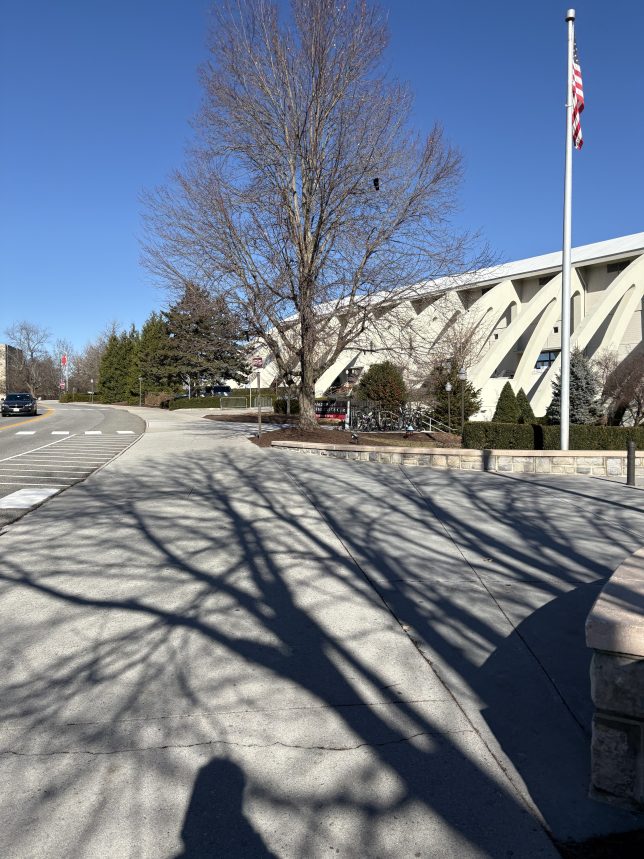
Figure 20. A tall winter tree near Cassell coliseum, its bare branches casting intricate shadows across the sidewalks
The tree stands bare in the winter light, its branches stretching upward like lines drawn against the sky. Even without its leaves, it feels strong and sturdy, rooted in a way that anchors the whole sidewalk around it. I pass this tree often, noticing how it changes throughout the seasons full and loud in the fall, quiet now, almost reflective. Today, its shape appears doubled on the ground, a shadow stretching across the pavement. The tree doesn’t move much, but its presence always fills the space more than I expect. (90)
U is for USA flag
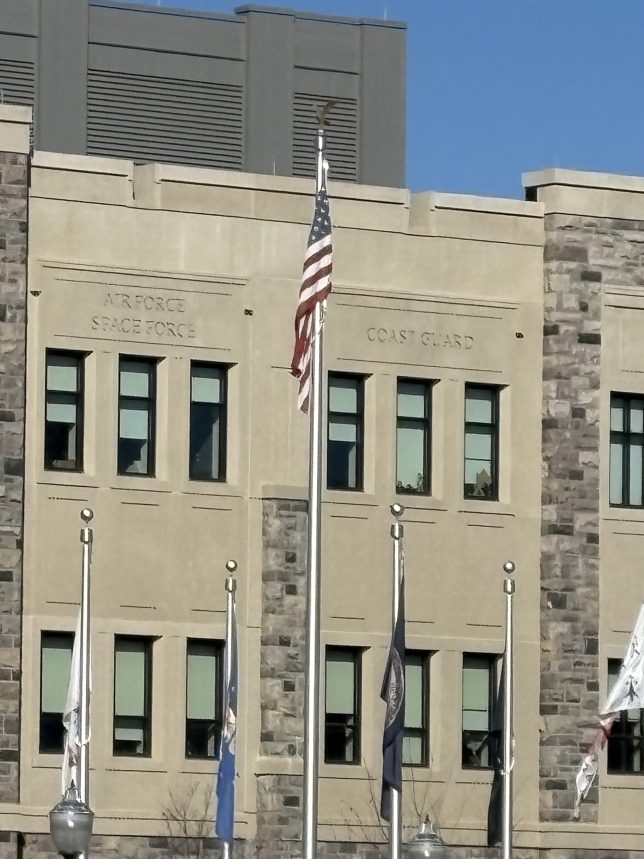
Figure 21. US flag waving beside service branch flags in the upper quad at Virginia Tech. (Original photograph, Anthony LaRosa)
The US flag hangs in the cold calm breeze, its stripes folding and unfolding like it’s breathing with the wind. Standing beneath it, you can hear the faint metallic tap of the pole shifting, a tiny sound that somehow makes the moment feel bigger. The sunlight catches the fabric just right, brightening the red and washing the white. Surrounded by all the other service flags, the US flag still pulls the eye first. It feels steady, almost anchoring the whole space, a familiar symbol rising above an ordinary campus afternoon. (90)
V is for Vawter hall
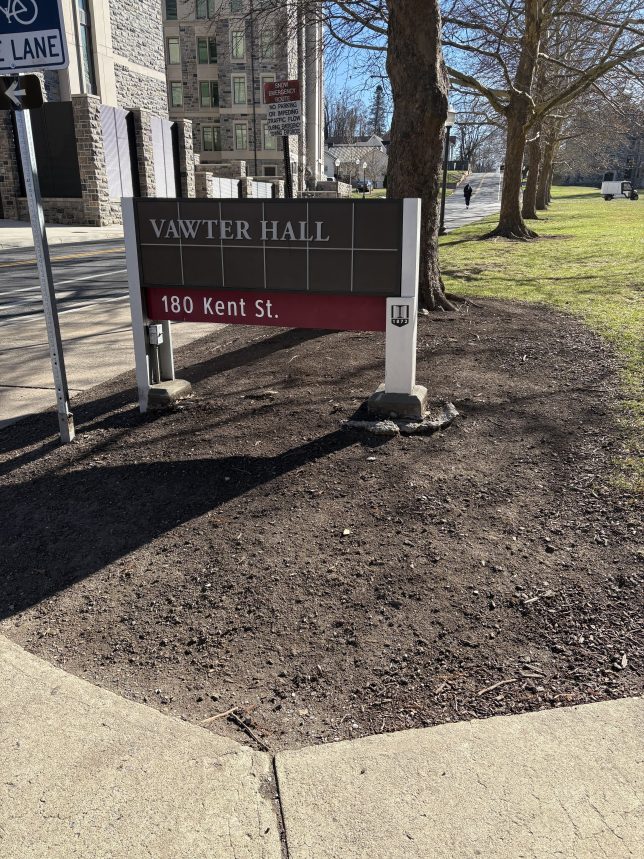
Figure 22. Sign for Vawter Hall with winter trees and surrounding sidewalk. (Original Photograph, Anthony LaRosa
Vawter Hall always pulls me back to freshman year the moment I walk by. It’s strange how a building can hold so many firsts, first move in day, first late-night walk back from campus, first time realizing college actually feels real. The sign looks the same as it did then, rooted in the ground beneath the bare winter trees. I remember learning every shortcut around here, figuring out where to be and when. Passing Vawter now, it feels smaller than I remember, but the memories around it still feels huge. (90)
W is for War memorial Chapel
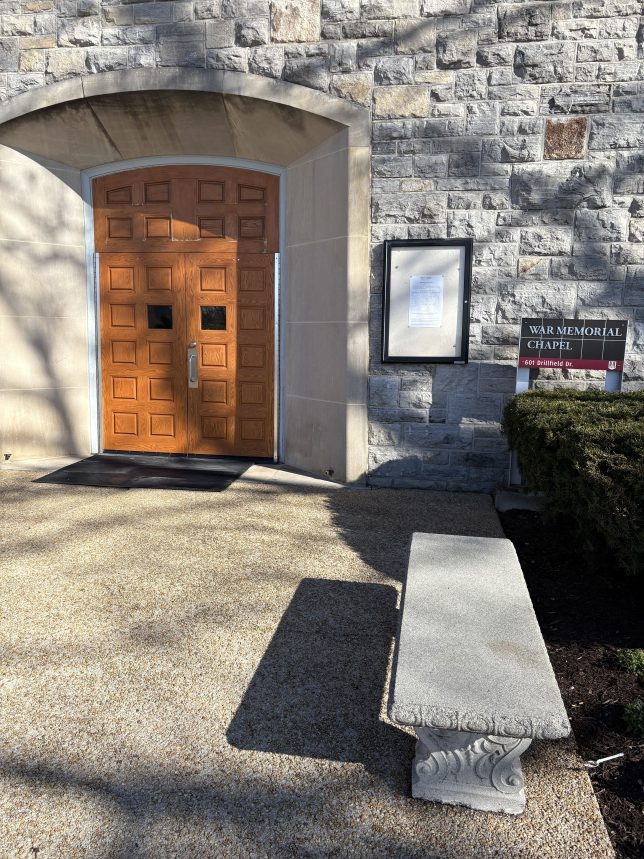
Figure 23. Entrance of War memorial chapel with wooden doors, surrounding Hokie stone, and a nearby stone bench casting a sharp shadow. (Original photograph, Anthony LaRosa)
The entrance to War Memorial Chapel feels tucked away, even though thousands of students pass it without noticing. The wooden doors catch the afternoon light, turning a warm orange that stands out against the cold Hokie Stone. I always sense a different kind of quiet here, the kind that makes you pause without realizing why. The stone bench nearby holds a sharp, clean shadow, as if saving a place for someone who hasn’t arrived yet. Walking by, the space feels calm, steady, and surprisingly grounding amid the rush of campus. (90)
X is for the x in exit
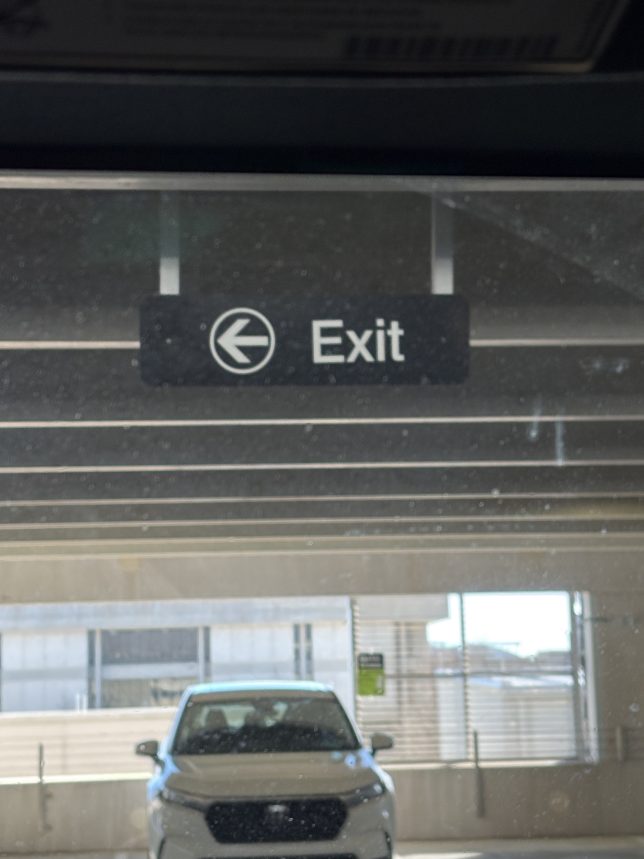
Figure 24. A black and white exit sign inside a campus parking garage, emphasizing the bold X above the driving lane. (Original photograph, Anthony LaRosa)
The X in the word exit catches my eye every time I pass underneath it. It’s sharp and somehow louder than the rest of the letters, like it’s doing all the work of pointing you out of the garage. In a space full of concrete and low echoes, that X feels almost symbolic an intersection, a crossing over point, a reminder that you’re leaving one environment for another. Light filters through the slats ahead, guiding you. Even in an ordinary parking deck, that single letter makes the moment feel directional. (90)
Y is for Yellow lines
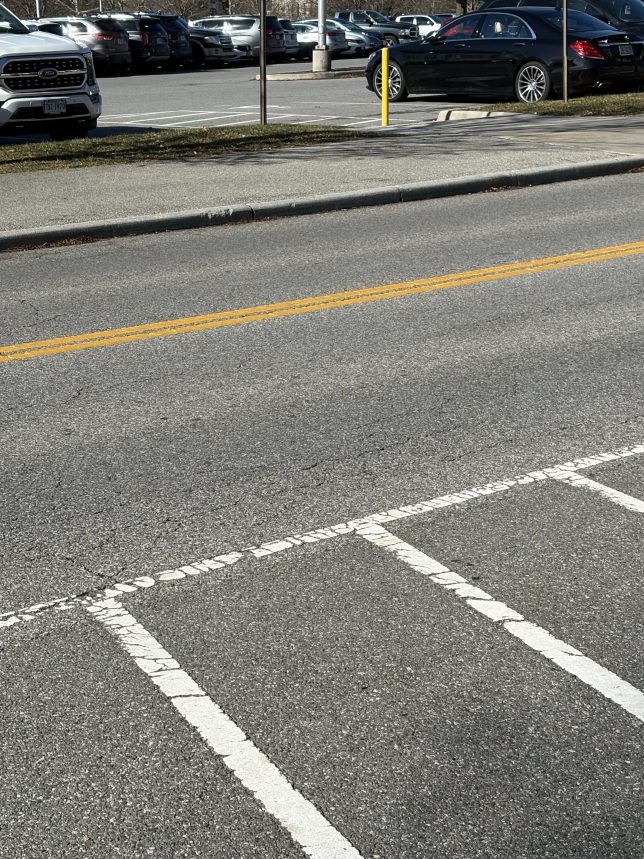
Figure 25. Bright yellow center lines and white parking stripes on a worn campus roadway near a parking lot. (Original photograph, Anthony LaRosa)
The yellow line cuts through the road with a confidence that doesn’t match how quiet the street feels today. It’s a simple stripe, with cracks in a few places, but it still does its job dividing, guiding, reminding drivers where not to drift. I walk past it without thinking most days, but standing here, the contrast between the bright yellow line and the worn asphalt stands out. Car’s edge into the parking lot across the road, tires crunching lightly. The yellow line stays steady, marking a boundary that never moves. (90)
Z is for Zipper
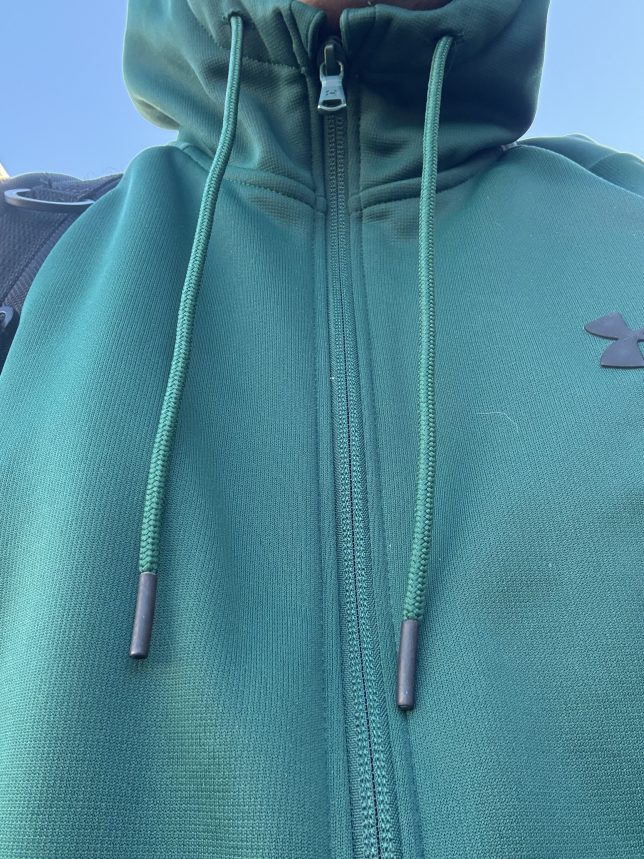
Figure 26. Close up view of a zipped green hoodie with hanging drawstrings, worn during a walk on campus. (Original photograph, Anthony LaRosa)
The zipper on my hoodie always sits right at the center, pulled up just enough to block the wind during early walks across campus. It’s such a small detail metal teeth, smooth track, a quick tug but it somehow sets the tone for the day. The drawstrings bounce lightly against my chest as I move, tapping a quiet rhythm I never really notice until I slow down. In photos, the zipper looks almost like a dividing line, splitting the fabric cleanly. It’s familiar, ordinary, and oddly comforting on cold mornings. (90)